Home › Caregiver Hub › Aging in Place Guides
Aging in Place Guides · How-to
How to Talk to a Parent About Mobility Aids: Step by Step (2026)

How to talk to a parent about mobility aids with warmth and respect: prepare, pick a good moment, offer choices and start with one small, low-stigma step.

We may earn a commission when you buy through links on this page, at no extra cost to you. Read our affiliate disclosure.
Learning how to talk to a parent about mobility aids is often harder than choosing the aid itself, because a cane or walker can feel like a sign that something is changing. This guide covers why parents resist, how to prepare, what to say, and what to do once there is a yes.
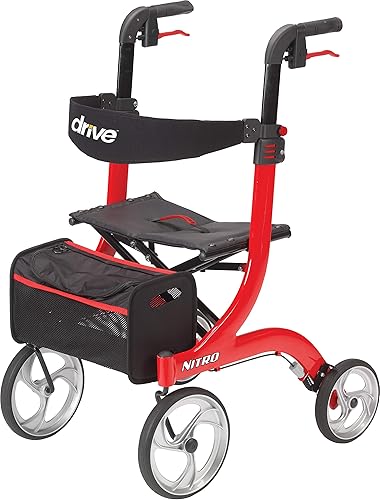
If you want a gentle place to start, three products make a good first conversation. The Drive Medical Nitro Euro-Style rollator suits a parent who still runs errands, since it is a frame with a seat for resting on the way. The Medline shower chair addresses one room and one task, so the talk is about the bath rather than walking. The RMS 32 inch reacher grabber is a small everyday tool that does not look like a walking aid. Product details follow the body of this guide.
A health note. This guide is about the conversation, not about which aid a parent needs. Balance, strength and walking questions belong with a doctor or physical therapist, who can assess your parent in person. Nothing here is medical advice.
Why parents often resist
Most parents who push back are protecting something, and independence matters most. A parent who has made their own decisions for decades may hear "you need a walker" as "you can no longer do this yourself."
Stigma plays a part, since many people link aids with being old. Cost can matter on a fixed income. Fear runs underneath: fear of falling, and of where accepting help might lead.
Prepare before you talk
Decide what you want from the conversation. A realistic goal is "try one thing," not "agree to a full plan today." Write down two or three specific moments when your parent struggled, such as getting out of the bath, so you can refer to real events rather than general worries.
Find out what is already known. Ask whether there has been a fall or a near-miss, and whether a doctor or therapist has raised mobility. Learn what each option does and what it does not do. If cost matters, check coverage yourself so you do not promise something untrue. The aging in place checklist can help you walk the home room by room first.
Choose the right time and place
Talk when your parent is rested and not in pain, and when neither of you is rushed. Avoid the moment right after a fall, when the talk will sound like blame, and avoid raising it in front of friends.
Sit side by side rather than across a table, or talk on a walk or quiet drive. Keep it short, with one clear next step.
Sample phrases to start with
Use your own words. Short, specific phrases usually land better than speeches. A few to adapt:
- "I noticed you held the counter when you stood up. How did that feel?"
- "I'd like to think through some ideas with you, if you're open to it."
- "Would you be willing to try something for a few weeks and see how it goes?"
- "This is your decision. I just want us both to have the information."
Avoid openers such as "You need" or "You can't." They put your parent on the defensive. Speak about what you have noticed and how you feel.
Listen before you suggest
Ask open questions and let your parent answer fully. "What has been hardest about getting around lately?" tells you more than "Do you think you need a cane?" Reflect back what you hear, so your parent feels understood before you suggest anything.
Offer choices, not verdicts
People accept more when they keep some control. Offer two or three options and let your parent choose: "Would you rather try a seat for the shower, or a grab bar by the tub?" Start with the smallest step that helps. A reacher for floor items is a different conversation from a walker for every trip out, and a small first yes makes the next one easier.
Bring in the doctor or physical therapist
A parent may accept a professional's advice when they would not accept it from a child. Ask whether they would raise the topic at their next appointment. A physical therapist can check balance, suggest the right height for a walker or cane, and show safe use. "Let's ask the therapist which one would be safest for you" leaves your parent in charge.
Try options together
Trying a device is often more persuasive than talking about it. Let your parent hold it, adjust it and take a few steps in a safe space. Set the height together, with your parent seated or standing as they normally would, because a poor fit can turn a parent against the whole idea.
When the answer is no
A no is information. It may mean the timing is wrong, the choice does not fit their life, or they are afraid. Ask what the no is about: "What would make this feel more useful to you?" Then leave the door open: "Can we talk about it again next month?"
Avoid threats, guilt and ultimatums. They tend to produce quiet non-use or hidden falls, which is more dangerous than an honest refusal. If there are serious safety concerns, bring in the doctor or therapist and keep your parent involved in the plan.
A short script
> Child: Mom, you mentioned the tub felt slippery last week. Can I ask how showers have been? > > Parent: It's fine. I'm careful. > > Child: I know you are. I just worry when I'm not there. Would you be open to trying a shower chair for a few weeks? You could choose the one you like. > > Parent: I don't know. I'd feel like an invalid. > > Child: That makes sense. Would it help if we looked at one together, and you decided whether it's worth keeping? > > Parent: Maybe. Let me think about it.
After you agree: fit, practice and follow-up
Agreement is the start of the work. Check the fit first. For a rollator, the handle grips should sit at the wrist crease with arms relaxed at the sides. Then practice together: lock both brakes before sitting, use the reacher's trigger, and step over the tub edge with the chair. Let your parent do it, not just watch. Follow up after a week or two and ask what they like and what is annoying, because a device that pinches or sits awkwardly will be quietly abandoned.
The three starter products
Facts below come from manufacturer listings, not from our own testing. See our editorial policy.
Drive Medical Nitro Euro-Style rollator
The Nitro suits a parent who walks outside as well as around the house. Per the listing, its 10 in. front casters are meant to roll over curbs and rough terrain. Because the frame rolls, it is not a standard walker, so ask a physical therapist whether it suits your parent's balance before buying.
Medline shower chair
The Medline chair adds support in the bath without changing how your parent moves around the house. The listing describes arms, a back and slip-resistant soles, and the manufacturer gives a 350 lb weight recommendation.
RMS 32 inch reacher grabber
The reacher is the smallest step. The listing describes a full-hand trigger and a rotating jaw for users with reduced grip strength, which is the manufacturer's description.
| Product | Works as a first conversation when | Listed figures |
|---|---|---|
| Drive Medical Nitro Euro-Style | Your parent wants to keep going out | 10 in. front casters, 17.5 lb |
| Medline shower chair | The shower feels like the hardest part | 350 lb, aluminum, padded arms and back |
| RMS 32 inch reacher | Your parent wants a low-pressure first yes | 32 in. reach, rotating jaw |
Choose the rollator if your parent walks outdoors, struggles on uneven ground, and wants a seat to rest on along the way.
Choose the shower chair if bathing has become tiring or slippery. It helps even if walking is otherwise fine.
Choose the reacher if your parent would rather start with something small that does not look like a walking aid.
Frequently asked questions
What if my parent refuses any help at all?
Start with what they want to keep doing, pick one small step, and accept a no for now. Revisit the subject after a change such as a fall or a doctor visit.
Should I talk to the doctor first?
It often helps. A doctor or physical therapist can check balance and walking and suggest the right type and height of aid. This guide is not medical advice.
Is a shower chair a sign my parent is declining?
Not necessarily. Many people use one for comfort and safety while bathing, and it can be presented as a practical upgrade.
What if my parent falls after the conversation?
Get medical advice promptly, especially after a head injury. Then revisit the safety plan with their doctor or therapist.
Keep reading
- Aging in place checklist
- Best dementia clocks
- Rollator vs wheelchair
- Best night lights for seniors
- Best grab bars for the bathroom
Emily Carter is the editorial author persona behind Age in Place Picks, covering senior mobility aids, home safety products, and aging-in-place solutions. Articles focus on manufacturer specifications, customer feedback, practical comparisons, and safer purchasing decisions for older adults and their families. Read our editorial policy.
This page is general information, not medical advice. Ask a doctor or physical therapist which product suits you.